
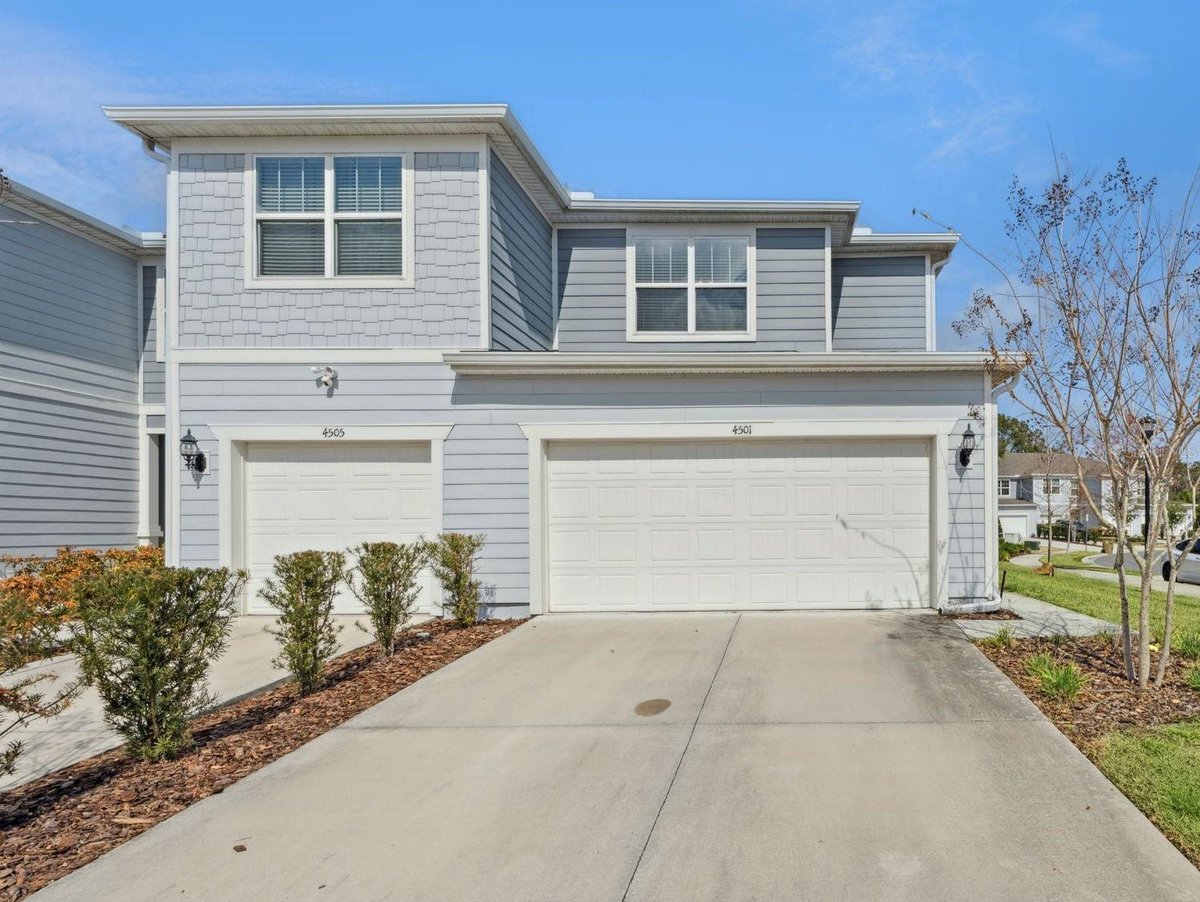
How Much House Can You Afford in Florida? A Realistic 2026 Affordability Guide
Published
A practical guide to understanding how much house you can afford in Florida in 2026, with updated price ranges, interest rates, and a free calculator to do the math for you.
Share this post
Florida's housing market in 2026 is dynamic — prices have moderated in some areas while desirable neighborhoods in Winter Park, Windermere, and lake-front communities remain competitive. If you're wondering "how much house can I afford in Florida?" — you're not alone, and the answer is more achievable than you might think.
The Short Answer: It Depends on Your Income
While national media often paints Florida as impossibly expensive, the reality is nuanced. A household earning $100,000 per year can realistically afford a home in the $350,000-$450,000 range in most Central Florida markets — well within the inventory available in Orlando, Kissimmee, Apopka, and Clermont.
Here's a general baseline for Central Florida buyers in 2026:
| Household Income | Estimated Affordability Range |
|---|---|
| $75,000 | $280,000 - $350,000 |
| $100,000 | $350,000 - $450,000 |
| $125,000 | $450,000 - $550,000 |
| $150,000 | $550,000 - $700,000 |
| $200,000 | $750,000 - $950,000 |
*These are estimates only. Your actual affordability depends on debts, down payment, credit score, and interest rate. Use our mortgage affordability calculator in Florida for a personalized number.*
The Four Key Factors That Determine Your Affordability
1. Your Gross Monthly Income
Your gross (before-tax) monthly income is the primary input for any mortgage affordability calculation. Lenders typically look at the past 2 years of income history, so if you're self-employed or have variable income, documentation requirements will be higher.
For salaried employees, the calculation is straightforward. For self-employed Florida buyers, expect lenders to review 2 years of tax returns and calculate an average income.
2. Your Debt-to-Income Ratio (DTI)
Your debt-to-income ratio compares your monthly debt payments to your gross monthly income. This is one of the most critical factors lenders evaluate.
Lenders categorize DTI into two ratios:
- Housing DTI: Only your housing costs divided by gross income. Most lenders want this at 28% or below.
- Total DTI: All debt (housing + car loans, student loans, credit cards, etc.) divided by gross income. Most lenders want this at 36% or below.
For example, if your gross monthly income is $10,000:
- Your max housing payment (at 28%) would be $2,800/month
- Your max total debt (at 36%) would be $3,600/month — meaning you can have up to $800/month in non-housing debt and still qualify
3. Your Down Payment
In Florida, your down payment size directly affects both your monthly payment and the interest rate you'll receive:
- 3% down (Conventional): Lower upfront cost but requires Private Mortgage Insurance (PMI), adding $100-$300/month
- 5% down (Conventional): Reduces PMI and improves your affordability picture
- 10%+ down: Significantly reduces your monthly payment and eliminates or reduces PMI
- 20% down: The gold standard — no PMI required, and lenders often offer better rates
For a $400,000 home:
- 3% down ($12,000) = $388,000 loan
- 20% down ($80,000) = $320,000 loan
That $68,000 difference in loan amount translates to roughly $350-$450 less per month in mortgage payments.
4. Your Interest Rate
Interest rates directly affect how much home you can afford. A 1% rate difference on a 30-year, $400,000 mortgage costs approximately $220-$280 more per month.
Florida mortgage rates in 2026:
- 30-year conventional fixed: 6.5%-7.5% (varies by credit score)
- 15-year conventional fixed: 5.9%-6.7%
- FHA 30-year: 6.3%-7.1%
- VA 30-year: 5.9%-6.5% (for eligible veterans)
Florida-Specific Costs That Affect Affordability
Most online affordability calculators are built for national averages and miss Florida-specific costs:
Flood Insurance
Florida's flood risk means many lenders require flood insurance if your property is in a flood zone. This cost is separate from homeowners insurance and can range from $500/year in low-risk areas to $5,000+ in high-risk zones. Always ask: "Is this property in a flood zone?" before budgeting.
Hurricane Insurance
Premiums vary wildly. Newer construction with hurricane-resistant features may qualify for discounts. Budget $2,400-$5,000/year as a baseline for Central Florida homes not in coastal flood zones.
HOA and Community Fees
Florida's master-planned communities and condos charge HOA fees that aren't part of your mortgage payment:
- Typical subdivision HOA: $50-$300/month
- Condo/townhome community: $200-$600/month
- Luxury communities (Windermere, Lake Nona): $500-$1,500/month
Property Taxes
Florida's property taxes are relatively reasonable compared to states like Texas or California:
- Orlando metro (Orange County): ~1.0% of assessed value annually
- Clermont area (Lake County): ~0.9%
- Kissimmee area (Osceola County): ~1.1%
- Sanford area (Seminole County): ~1.1%
On a $400,000 home, that's $3,600-$4,400 per year in property taxes.
How to Use the Calculator to Get Your Real Number
Our Florida mortgage affordability calculator asks for:
- Gross monthly income (all earners in the household combined)
- Monthly debt payments (minimum required on all loans and credit cards)
- Down payment amount you plan to bring
- Estimated interest rate
- Loan term (15 or 30 years)
- Estimated property tax and insurance costs for your target area
The output gives you a maximum home price — and a month-by-month payment breakdown showing principal, interest, taxes, insurance, and HOA.
The Pre-Approval Step
An affordability calculator is a planning tool, not a lender commitment. Once you have a target number, the next step is getting pre-approved by a Florida mortgage lender.
A pre-approval letter typically:
- Requires a credit check (hard inquiry)
- Verifies your income and employment
- Commits a lender to a specific loan amount (subject to property appraisal)
- Is valid for 60-90 days
- Shows real estate agents and sellers you're a qualified buyer
In competitive Florida markets, having a pre-approval letter alongside your affordability calculation gives you a significant advantage over buyers who haven't taken these steps.
Frequently Asked Questions
Can I afford a home in Florida on a $70,000 salary?
Yes — with a 10% down payment on a 30-year conventional loan, a $70,000 annual salary can typically support a home in the $280,000-$320,000 range in most Central Florida markets, assuming moderate existing debts.
Do Florida first-time buyers need 20% down?
No. Florida conventional loans accept as low as 3% down for qualified buyers. FHA loans require 3.5% down. VA loans (for eligible veterans) can require $0 down. Don't let down payment requirements prevent you from buying.
What credit score do I need to buy a home in Florida?
Most Florida lenders look for a minimum credit score of 620 for conventional loans. FHA loans may approve scores as low as 580 with 3.5% down. Higher scores (720+) unlock the best interest rates.
Should I wait for interest rates to drop before buying?
This is a personal decision. If you can afford the home now and plan to stay for 5+ years, buying sooner rather than later often makes sense — you build equity, lock in your payment, and benefit from Florida's long-term appreciation trends.
Ready to get your real number? Use the Florida mortgage affordability calculator now — it takes 2 minutes and gives you the clarity you need to shop with confidence.